Kazimierz Bulas
Biography
Professor Kazimierz (Casimir) Bulas (1903-1970) was a distinguished archaeologist, classical philologist, translator, researcher of ancient art, and pioneer of neo-Hellenistic university studies.
Early Life
Kazimierz was the son of Jan Bulas and Maria Targosz, born on February 17, 1903, in Wadowice, Poland to a merchant family. From an early age, he demonstrated exceptional academic ability.
He passed the entrance exam to the local Imperial-Royal Gymnasium effortlessly, becoming one of the top students for eight years.. On June 13, 1921, he passed the secondary school final exam "with progress aimed at academic studies," as noted on his certificate.
University Studies and Early Career
Starting in the fall of 1921, Bulas studied classical archaeology and ancient history at the Faculty of Philosophy at the Jagiellonian University in Kraków. In addition to his required courses, he attended lectures on art history, philosophy, Romance philology, pedagogy, Polish literature, Lithuanian, and Turkish.
A highly talented and diligent student, he quickly earned the recognition of Professor Piotr Bieńkowski, who employed him as a junior assistant. At the time, Bulas was in his second year and the youngest assistant at the Classical Archaeology Office and Seminar at the Jagiellonian University.
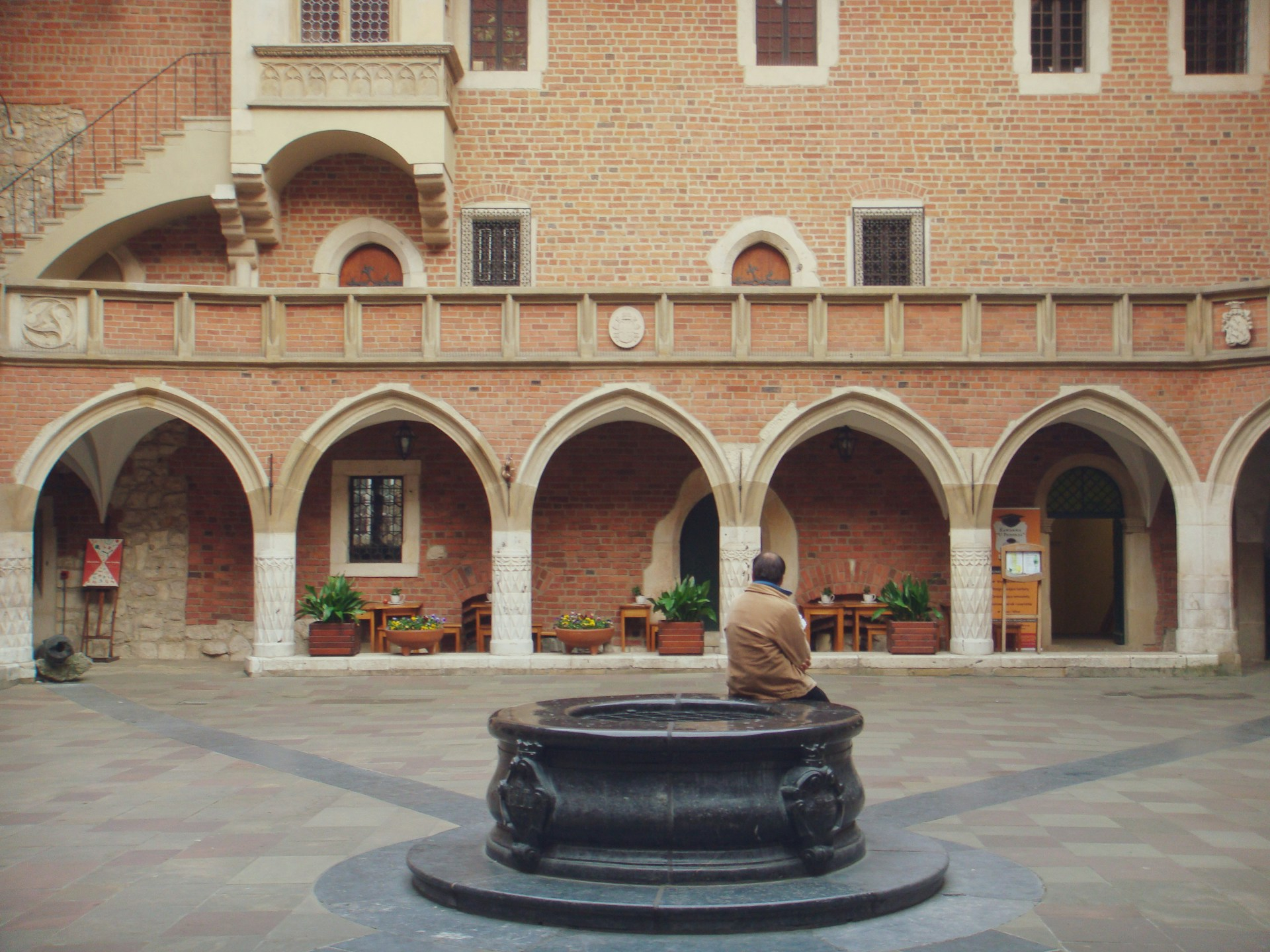
Soon after, Professor Bieńkowski arranged for him to travel to France and Italy for further studies. He completed these studies in 1925, earning a certificate of completion (“absolutorium”), which qualified him to pursue a doctoral degree.
He conducted research for his doctorate in Italy, and in 1927, after completing a highly regarded dissertation titled Illustrations to the Iliad in Antiquity and passing his doctoral exams with distinction, he was awarded a PhD in classical archaeology from Jagiellonian University.
Career before World War II
From 1931 until the outbreak of World War II, he was a lecturer of Modern Greek at the university. During this time, he also taught Latin and Greek at St. Jacek's Gymnasium in Kraków and worked in the Polish-Italian Society's reading room.
International Advanced Studies
A scholarship from the National Culture Fund allowed him to continue his studies abroad in preparation for his habilitation. His two-year academic journey began in Berlin and included stops in Belgium, France, England, Italy, Yugoslavia, Turkey, and Greece.
He spent six months as an intern at the École Française d'Athènes in Greece during 1930/1931. After returning to Poland, he was appointed senior assistant.
Bulas was known as a polyglot, with a strong command of over a dozen languages.
Habilitation and Greek Ceramics
In 1935, he obtained his habilitation at the Jagiellonian University by presenting a work titled Chronology of Attic Funeral Steles of the Archaic Era, which was highly regarded by scholars. The following year, he was appointed assistant professor, a position he held until the outbreak of the war.
He lectured on classical Greek painting and the history of Greek painting. Over time, his interests centered on Greek ceramics and vase painting. He authored and co-authored the first three volumes of the Polish series Corpus Vasorum Antiquorum (1931-1936) under the patronage of the Polish Academy of Arts and Sciences in Kraków.
The "Bulas Group"
In 1932, he published a specialist article on a group of miniature vessels with distinctive decoration, classifying and establishing their chronology. Soon after, ceramics researchers began referring to these vessels as belonging to the "Bulas group," a term that remains in use today.
Kazimierz Bulas also authored the first Polish-language textbook on ceramics, Greek Ceramics, for students of archaeology and art history, which quickly became a standard text. He devoted much energy to promoting Greek culture.
Radio Broadcasts and Translations
Immediately after returning from Greece in 1931-1932, he hosted talks on Radio Katowice and Radio Kraków, which enjoyed great popularity. The topics mainly focused on contemporary Greek issues. He regularly published these texts in the Ilustrowany Kurier Codzienny and its supplements.
Bulas went further and came up with the idea of addressing the Greek people directly via radio. At that time, Greece had no radio station of its own, so he broadcasted monthly in Modern Greek from Katowice, becoming one of the most popular figures among the Greek audience.
One of his major contributions was his Outline of the History of Modern Greek Literature, published in Wielka Literatura Powszechna (1933). He also translated several works by Spiros Melas, such as Judas and Papa.

Recognition from Greece
He visited Greece every year, giving lectures and readings. In the years 1936-1938 he gave eight lectures in Athens and Thessaloniki in French and Modern Greek. One such occasion was the opening of an airline to Thessaloniki; another was the 1937 naming of a street in Thessaloniki as "Polish Street" (Odos Polonias). In April 1937, during celebrations for the centenary of the National University of Kapodistrias, Kazimierz Bulas was part of the delegation from the Jagiellonian University.
For his contributions to Polish-Greek cultural cooperation, he was awarded the Royal Order of the Phoenix gold cross, Greece’s highest honor for foreigners.
Diplomatic Role
In 1937, he helped organize a ceremony where a Greek delegation deposited soil from the so-called "Poles' Grave" in Missolonghi onto the Piłsudski Mound in Kraków.
Beginning in 1932, Bulas served as honorary consul of Greece in Kraków, a testament to Greece's recognition of his contributions to Polish-Greek academic collaboration.
Kazimierz Bulas was a full and honorary member of various societies, including the Polish Numismatic Society, the Romanian Numismatic Society (honorary), the Polish Academy of Arts' Art History Commission, the German Archaeological Institute in Berlin, and the Parnassos Society in Athens.
World War II and Imprisonment
On November 6, 1939, he was arrested during Sonderaktion Krakau and imprisoned with other professors from the Jagiellonian University and the Mining Academy in the Sachsenhausen concentration camp. On March 5, 1940, he was transferred to Dachau. The Greek embassy in Berlin had already intervened on February 14, 1940, on his behalf, seeking his release. On April 12, Kazimierz Bulas was released from Dachau and returned to Kraków.
He supported his family during the war by giving private lessons. Despite being evicted from his apartment and imprisoned twice more in 1943 at the Płaszów camp, Bulas managed to endure.
Post-War Career and Move to the United States
After the war, he resumed his role as assistant professor and later became a professor at Nicolaus Copernicus University in Toruń, where he took over the Department of Mediterranean Archaeology. He gave lectures starting in 1945.
Kazimierz Bulas was also involved in translating the testimony of Amon Goeth, the commandant of the Płaszów camp, for Goeth's 1946 trial. The following year, he was appointed head of the PAU scientific station in Rome.
In 1951, Bulas and his family moved to the United States permanently.
He became a professor of Slavic philology and librarian at Rice University in Houston, Texas. While continuing his work in archaeology, he focused on developing a Polish-English and English-Polish dictionary, published by the Kościuszko Foundation in New York in 1959, with a revised edition - prepared together with Wilfrid and Lowrens - released in 1963.
Kazimierz Bulas passed away in Houston, Texas, on September 26, 1970, leaving behind a significant legacy in the fields of archaeology, philology, and cultural studies.